

After an asteroid slammed into Earth 66 million years ago, now called the Cretaceous-Paleogene (K-Pg) extinction, fish in the fossil record went dark for about 10,000,000 years. When they have been found again, any species that look different than those that came before, leaving scientists to wonder what evolutionary paths fishes took between about 66 and 56 million years ago.
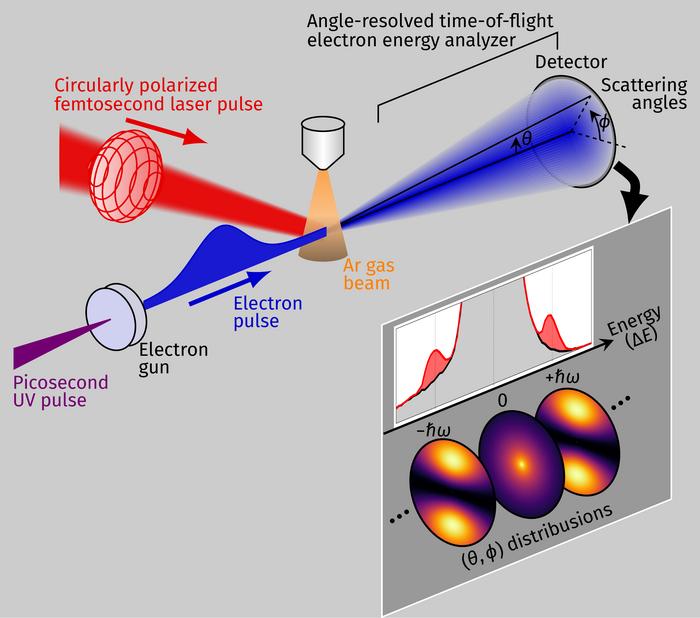
Laser-assisted electron scattering (LAES) is a tool for understanding how electrons interact with matter under the influence of strong fields. When electrons are fired at atoms or molecules, they are scattered in all directions; the presence of strong light can change the way in which the scattering takes place due to an exchange of energy with the surrounding light field. The amount of energy exchanged is precisely governed by quantum mechanics and yields characteristic shifts in the energies held by scattered electrons.
Citrus fruits from the mandarin family have important commercial value but how their diversity arose has been something of a mystery
Researchers analyzed the genomes of the East Asian varieties and found a second center of diversity in the Ryukyu Islands along with the previously known center in the mountains of southern China
They discovered a new citrus species native to Okinawa that arose about two million years ago when the Ryukyu archipelago became disconnected from mainland Asia
How do you study a group of organisms with over 300,000 species, dispersed across all seven continents, and with up to 50 times as much DNA content as the human genome?
This is the question posed to biologists studying the evolutionary history of flowering plants, called angiosperms, whose rapid diversification was so convoluted a problem that Darwin referred to it as the 'abominable mystery.'
AMES, Iowa - A new study led by an Iowa State University scientist sheds light on how organisms have evolved to address imbalances in sex chromosomes.
The study looks at a species of softshell turtle, but the results could help to illuminate an important evolutionary process in many species, said Nicole Valenzuela, professor of ecology, evolution and organismal biology and lead author of the study.
A new "return to campus" survey led by The Ohio State University's Office of the Chief Wellness Officer finds rising rates of anxiety, depression, burnout and the use of unhealthy coping mechanisms among students navigating through a year affected by the COVID-19 pandemic, similar to other data on college students throughout the U.S.
Ohio State conducted surveys in August 2020 and April 2021 of randomly-selected students to assess changes in mental health, coping strategies, healthy lifestyle behaviors and needs over time. Among the 1,072 Ohio State students who responded:
PITTSBURGH, July 26, 2021 - Adolescents who set goals for their future and those with strong parental support are less likely to use e-cigarettes and other tobacco products, according to a study by UPMC Children's Hospital of Pittsburgh and University of Pittsburgh School of Medicine physician-scientists.
The research, published today in the journal Pediatrics, suggests that strategies to prevent youth vaping may be different from what works to dissuade youth from smoking cigarettes.
Oncotarget published "Frame-shift mediated reduction of gain-of-function p53 R273H and deletion of the R273H C-terminus in breast cancer cells result in replication-stress sensitivity" which reported that these authors recently documented that gain-of-function mutant p53 R273H in triple negative breast cancer cells interacts with replicating DNA and PARP1.
Oncotarget published "TERT and its binding protein: overexpression of GABPA/B in high grade gliomas" which reported that all GA-binding proteins progress through the glioma grades and have the highest expression levels in secondary glioblastomas.
Thermal-imaging sensors that detect and capture images of the heat signatures of human bodies and other objects have recently sprung into use in thermostats to check facial temperatures in a contactless attempt to screen for COVID-19 at several building entrances. Under these circumstances, the smartphone industry is actively considering the incorporation of such sensors as portable features to create the add-on function of measuring temperature in real time. Additionally, the application of such technology to autonomous vehicles may facilitate safer autonomous driving.