Body

Ticks that vector Lyme disease move west into North Dakota

According to the U.S. Centers for Disease Control, there are more than 300,000 cases of Lyme disease in the U.S. each year. Last year, most Lyme disease cases reported to the CDC were concentrated heavily in the Northeast and upper Midwest, with 96 percent of cases in 13 states. In fact, the disease gets its name from the northeastern town of Lyme, Connecticut, where it was first discovered.

Study finds high protein diets lead to lower blood pressure

(Boston)--Adults who consume a high-protein diet may be at a lower risk for developing high blood pressure (HBP). The study, published in the American Journal of Hypertension, by researchers from Boston University School of Medicine (BUSM), found participants consuming the highest amount of protein (an average of 100 g protein/day) had a 40 percent lower risk of having high blood pressure compared to the lowest intake level.

New defense mechanism against viruses discovered

This news release is available in German.

UM research reveals secrets of animal weapons

MISSOULA – From antlers to horns, humans have long been fascinated by animals' ability to defend themselves with their natural-born weapons. But until now, no studies have directly tested whether those weapons perform better at the animals' own style of fighting than they would using the fighting style of another species. Researchers at the University of Montana recently discovered each species' weapons are structurally adapted to meet their own functional demands of fighting.

Study: Cat bites dog

NEW YORK (September 11, 2014) – A new study led by the Wildlife Conservation Society reveals that in India's human dominated agricultural landscapes, where leopards prowl at night, it's not livestock that's primarily on the menu – it is man's best friend.

The study, which looked at scat samples for leopards in India's Ahmednagar's district in Maharashtra, found that 87 percent of their diet was made up of domestic animals. Domestic dog dominated as the most common prey item at 39 percent and domestic cats were second at 15 percent.

How bacteria battle fluoride

He's not a dentist, but Christopher Miller is focused on fluoride. Two studies from his Brandeis University lab provide new insights into the mechanisms that allow bacteria to resist fluoride toxicity, information that could eventually help inform new strategies for treating harmful bacterial diseases. The studies appear in The Journal of General Physiology (JGP).

Cutting health-care costs 1 appendix at a time

(SALT LAKE CITY)—Consumer price comparison is almost nonexistent in the U.S. health care system, but a new study shows that when given the choice between a less costly "open" operation or a pricier laparoscopy for their children's appendicitis, parents were almost twice as likely to choose the less expensive procedure – when they were aware of the cost difference.

Crop improvement and resistance to pathogens benefits from non-coding RNA studies

With the rise of emerging economies around the world and a concomitant upgrade of health care systems, the global population has been rapidly expanding. As a consequence, worldwide demand for agricultural products is also growing.

Crops now provide food and the other important resources for seven billion humans.

Food supplies are primarily based on such crops as wheat, maize, rice and vegetables. But as the area of arable land and of cultivated land continues to decline, the future ability to meet the world's food security needs has come under a cloud of uncertainty.

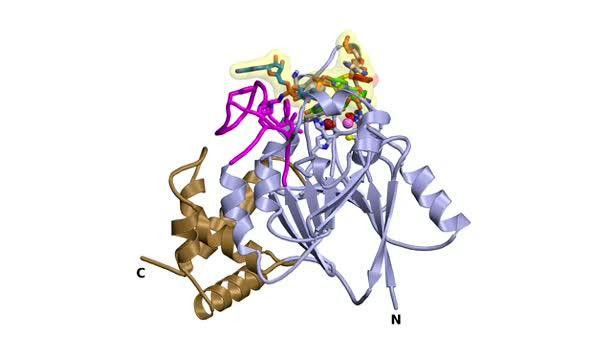
Structure of enzyme seen as target for ALS drugs

The other lead investigators on the paper, published as a "Breakthrough Manuscript" in Nucleic Acids Research, are Masad Dahma, Ph.D., professor and chair of the Department of Chemistry at McGill University in Montreal, and Scott Stevens, Ph.D., associate professor of molecular genetics and microbiology at The University of Texas at Austin.

Researchers create world's largest DNA origami

Researchers from North Carolina State University, Duke University and the University of Copenhagen have created the world's largest DNA origami, which are nanoscale constructions with applications ranging from biomedical research to nanoelectronics.

"These origami can be customized for use in everything from studying cell behavior to creating templates for the nanofabrication of electronic components," says Dr. Thom LaBean, an associate professor of materials science and engineering at NC State and senior author of a paper describing the work.

New superfoods could help key protein keep bodies healthy

A new generation of new superfoods that tackle heart disease and diabetes could be developed following research into a protein that helps keep cells in our bodies healthy.

Researchers at the University of Warwick found that the protein, called Nrf2, continually moves in and out of the nuclei of human cells to sense the cell's health and vitality.

When Nrf2 is exposed to threats to the cell's health it oscillates faster and activates an increase in the cell's defence mechanism, including raising the levels of antioxidant.

Smokers who consume too much sodium at greater risk of developing rheumatoid arthritis

A new study published online in the journal Rheumatology today indicates that the interaction between high sodium intake and smoking is associated with a more than doubled risk of developing rheumatoid arthritis (RA).

'Fat shaming' doesn't encourage weight loss

Discrimination against overweight and obese people does not help them to lose weight, finds new UCL research funded by Cancer Research UK.

In a study of 2,944 UK adults over four years, those who reported experiencing weight discrimination gained more weight than those who did not. On average, after accounting for baseline differences, people who reported weight discrimination gained 0.95kg whereas those who did not lost 0.71kg, a difference of 1.66kg.

Genomic analysis reveals that a high-risk leukemia subtype becomes more common with age

More than one-quarter of young adults with the most common form of acute lymphoblastic leukemia (ALL) have a high-risk subtype with a poor prognosis and may benefit from drugs widely used to treat other types of leukemia that are more common in adults, according to multi-institutional research led by St. Jude Children's Research Hospital investigators. The study appears in the current issue of The New England Journal of Medicine.

Chemists discover way nose perceives common class of odors

Biologists claim that humans can perceive and distinguish a trillion different odors, but little is known about the underlying chemical processes involved. Biochemists at The City College of New York have found an unexpected chemical strategy employed by the mammalian nose to detect chemicals known as aldehydes.