Body

Smoking during pregnancy may affect grandchildren's growth

A UK study published in the American Journal of Human Biology has found that smoking during pregnancy has discernible effects on the growth of a woman's future grandkids.

Ebola has profound effects on wildlife population dynamics

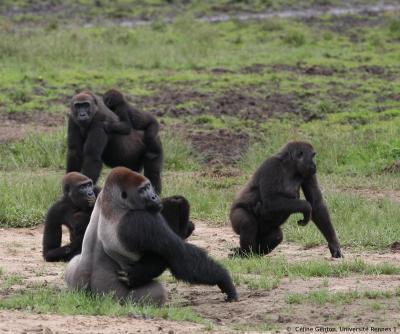
New research in gorillas that were affected by an Ebola virus outbreak shows that disease can influence reproductive potential, immigration and social dynamics, and it highlights the need to develop complex models that integrate all the different impacts of a disease.

This approach requires long-term monitoring of wildlife populations to understand the responses of populations to emerging changes in the environment, according to the Journal of Animal Ecology study.

Pigs' hearts transplanted into baboon hosts remain viable more than a year

Beverly, MA, August 18, 2014 – Investigators from the National Heart, Lung, and Blood Institute (NHLBI) of the National Institutes of Health (NIH) have successfully transplanted hearts from genetically engineered piglets into baboons' abdomens and had the hearts survive for more than one year, twice as long as previously reported.

Free fatty acids may be as effective as antibiotics in treating catheter infections

PROVIDENCE, R.I. – Researchers at Rhode Island Hospital, Veterans Affair Medical Center in Providence and University of Rhode Island have found that a free fatty acid, made up of compounds similar to those naturally made in the body, may be as effective at fighting certain infections as antibiotics. The study is published online in advance of print in the Journal of Antimicrobial Chemotherapy.

Did an exceptional iceberg sink the Titanic?

While the sinking of the Titanic in 1912 is typically blamed on human, design and construction errors, a new Significance paper points to 2 other unfavorable factors outside human control: there were a greater number of icebergs than normal that year, and weather conditions had driven them further south, and earlier in the year, than was usual.

The paper also notes that iceberg discharge from glaciers is increasing, with more heavy iceberg years since the 1980s than before, and increasing global warming will likely cause this trend to continue.

Invasion of the Americas by mosquito-borne virus likely

While media attention has been focused recently on coronavirus cases in the Arabian peninsula and the Ebola outbreak in West Africa, experts note that another threat lies in the spread of Chikungunya fever, an illness that is transmitted by mosquitoes and can cause fever, joint and muscle pain, headaches, and rashes. While it does not often cause death, the symptoms can be severe and disabling, with no treatment available.

IU study: Parents' vaccine intentions influenced by how benefits are communicated

INDIANAPOLIS -- How do parents decide whether to vaccinate their child? In a study designed to formally look at the content of parent-targeted communications about the benefits of vaccination for measles, mumps and rubella, Indiana University School of Medicine investigators report that the framing of these messages influences parents' intentions to immunize their children.

White, straight women leading surge in infertility treatments

WASHINGTON — Heterosexual white women are twice as likely as racial or sexual minority women to obtain medical help to get pregnant, according to a recent study published by the American Psychological Association.

BGRF announces OncoFinder algorithm for reducing errors in transcriptome analysis

Scientists from the Biogerontology Research Foundation (BGRF), a UK-based charity founded to support ageing research and address the challenges of a rapidly ageing population, propose a new concept for signalome-wide analysis of changes in intracellular pathways, called OncoFinder, which allows for accurate and robust cross-platform analysis of gene expression data.

Club cells are 'bad guys' during flu infection

A specialized subset of lung cells can shake flu infection, yet they remain stamped with an inflammatory gene signature that wreaks havoc in the lung, according to a study published in The Journal of Experimental Medicine.

Antibiotics in early life may alter immunity long-term

New University of British Columbia research found that receiving antibiotic treatments early in life can increase susceptibility to specific diseases later on.

Most bacteria living in the gut play a positive role in promoting a healthy immune system, but antibiotic treatments often do not discriminate between good and bad bacteria. The study published today in Journal of Allergy and Clinical Immunology helps scientists understand how different antibiotics affect good bacteria.

New discovery: Microbes create dripstones

According to new research humble, microscopic organisms can create dripstones in caves. This illustrates how biological life can influence the formation of Earth's geology - and the same may be happening right now on other planets in space.

According to traditional textbooks dripstones are created by geological or geochemical processes with no influence from living organisms. But now scientists report that formation of dripstones can be a lot more complex than that: Sometimes microbes are responsible for the formation of these geological features.

Toothless 'dragon' pterosaurs dominated the Late Cretaceous skies

A new study provides an exciting insight into the Late Cretaceous and the diversity and distribution of the toothless 'dragon' pterosaurs from the Azhdarchidae family. The research was published in the open access journal ZooKeys.

Unraveling the mysteries of the Red Sea: A new reef coral species from Saudi Arabia

The hard corals primarily responsible for the construction of coral reefs around the world have attracted the attention of taxonomists for hundreds of years. Despite the important role such corals play in building what are arguably the world's most diverse ecosystems, coral reefs in some parts of the world still hold surprises for modern scientists.

Artificial cells act like the real thing

Imitation, they say, is the sincerest form of flattery, but mimicking the intricate networks and dynamic interactions that are inherent to living cells is difficult to achieve outside the cell. Now, as published in Science, Weizmann Institute scientists have created an artificial, network-like cell system that is capable of reproducing the dynamic behavior of protein synthesis.