Body

Is Facebook actually making communication about products and brands more interesting?

Communication channels such as Facebook may be leading consumers to discuss more interesting products, according to a new study in the Journal of Consumer Research.

From embarrassing Facebook posts to controversial Tweets, why are consumers oversharing online?

Increased use of digital communication is causing consumers to lose their inhibitions and "overshare" online, according to a new study in the Journal of Consumer Research.

"Sharing itself is not new, but consumers now have unlimited opportunities to share their thoughts, opinions, and photos, or otherwise promote themselves and their self-image online. Digital devices help us share more, and more broadly, then ever before," writes author Russell W. Belk (York University).

Materialism and loneliness: Is there really a vicious cycle?

Despite being much-maligned, materialism is not always bad for consumers.

Loneliness may cause materialism, but the opposite is not necessarily true, according to a new study in the Journal of Consumer Research.

Gadget genius

Akron, Ohio, July 25, 2013 — University of Akron researchers have developed new materials that function on a nanoscale, which could lead to the creation of lighter laptops, slimmer televisions and crisper smartphone visual displays.

Known as "giant surfactants" – or surface films and liquid solutions – the researchers, led by Stephen Z. D. Cheng, dean of UA's College of Polymer Science and Polymer Engineering, used a technique known as nanopatterning to combine functioning molecular nanoparticles with polymers to build these novel materials.

Molecular monkey arranges X-chromosome activation

X chromosomes are very special genetic material. They differ in number between men and women. To achieve equality between sexes, one out of two X chromosomes in women is silenced. In flies, the opposite happens: in male flies, the only available X chromosome is highly activated, to compensate for the absence of the second X-chromosome. Researchers from the Max Planck Institute of Immunobiology and Epigenetics (MPI-IE) in Freiburg have now shown how the RNA molecules and proteins involved in the activation find and stick to each other.

Database simplifies finding Canadian plant names and distribution

Environmental consultants, research ecologists, nature conservation agencies, city managers, translators, and many others, all need to put names to plants at one time or another. The sources used often are not scientifically up-to-date, making it difficult to figure out the accepted name or proper vernacular to use in a vast country like Canada. The VASCAN database simplifies this task for all users.

Researchers find new way to create 'gradients' for understanding molecular interactions

Scientists use tools called gradients to understand how molecules interact in biological systems. Researchers from North Carolina State University have developed a new technique for creating biomolecular gradients that is both simpler than existing techniques and that creates additional surface characteristics that allow scientists to monitor other aspects of molecular behavior.

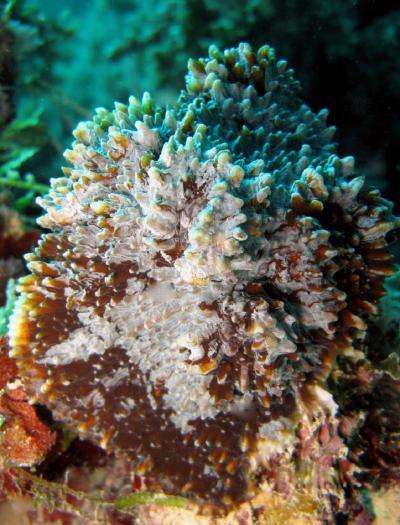
A new coral reef species from the Gambier Islands, French Polynesia

The new species Echinophyllia tarae is described from the remote and poorly studied Gambier Islands, French Polynesia. Although the new species is common in the lagoon of Gambier Islands, its occurrence elsewhere is unknown. Echinophyllia tarae lives in protected reef habitats and was observed between 5 and 20 m depth. It is a zooxanthellate species which commonly grows on dead coral fragments, which are also covered by crustose coralline algae and fleshy macroalgae.

Overactive immune response blocks itself

As part of the innate immune system natural killer cells (NK cells) play an important role in immune responses. For a long time they have been known as the first line of defense in the fight against infectious diseases. Therefore, researchers assumed that the body needs as many active NK cells as possible. However, scientists at the Helmholtz Centre for Infection Research (HZI) have now shown that the principle "the more the better" does not apply to this type of immune cells.

Traditional forest management reduces fungal diversity

There is a shortage of dead wood in forests because fallen branches and trees tend to be cleared away. This wood, if available, ought to be decomposing, as it is the habitat of many living beings like lignicolous fungi. These fungi are capable of decomposing dead wood and turning it into organic and inorganic matter. So clearing away the dead wood from the forests is ecologically harmful for the fungi.

Quantum of sonics: Bonded, not stirred

Researchers at McGill University have discovered a new way to join materials together using ultrasound. Ultrasound – sound so high it cannot be heard – is normally used to smash particles apart in water. In a recent study, the team of researchers, led by McGill professor Jake Barralet, from the faculties of Dentistry and Medicine, found that if particles were coated with phosphate, they could instead bond together into strong agglomerates, about the size of grains of sand. Their results are published in the journal Advanced Materials.

Inherited virus can cause cognitive dysfunction and fatigue

Tampa, FL (July 25, 2013) -- Many experts believe that chronic fatigue syndrome (CFS) has several root causes including some viruses. Now, lead scientists Shara Pantry, Maria Medveczky and Peter Medveczky of the University of South Florida's Morsani College of Medicine, along with the help of several collaborating scientists and clinicians, have published an article in the Journal of Medical Virology suggesting that a common virus, Human Herpesvirus 6 (HHV-6), is the possible cause of some CFS cases.

Scientists ID compounds that target amyloid fibrils in Alzheimer's, other brain diseases

UCLA chemists and molecular biologists have for the first time used a "structure-based" approach to drug design to identify compounds with the potential to delay or treat Alzheimer's disease, and possibly Parkinson's, Lou Gehrig's disease and other degenerative disorders.

All of these diseases are marked by harmful, elongated, rope-like structures known as amyloid fibrils, linked protein molecules that form in the brains of patients.

Pesticides contaminate frogs from Californian National Parks

Pesticides commonly used in California's Central Valley, one of the world's most productive agricultural regions, have been found in remote frog species miles from farmland. Writing in Environmental Toxicology and Chemistry, researchers demonstrate the contamination of Pacific Tree Fogs in remote mountain areas, including national parks; supporting past research on the potential transport of pesticides by the elements.

Suffocating tumors could lead to new cancer drugs

Scientists have discovered a new molecule that prevents cancer cells from responding and surviving when starved of oxygen and which could be developed into new treatments for the disease, according to new research published in the Journal of the American Chemical Society* today (Friday).

Cancer Research UK scientists at the University of Southampton found that this molecule targets the master switch -- HIF-1 -- that cancer cells use to adapt to low oxygen levels, a common feature in the disease.