Body

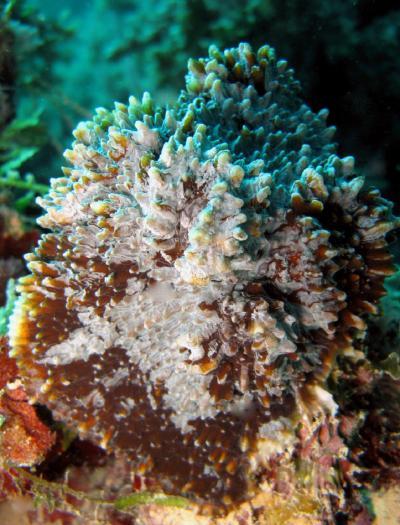
The new species Echinophyllia tarae is described from the remote and poorly studied Gambier Islands, French Polynesia. Although the new species is common in the lagoon of Gambier Islands, its occurrence elsewhere is unknown. Echinophyllia tarae lives in protected reef habitats and was observed between 5 and 20 m depth. It is a zooxanthellate species which commonly grows on dead coral fragments, which are also covered by crustose coralline algae and fleshy macroalgae.
As part of the innate immune system natural killer cells (NK cells) play an important role in immune responses. For a long time they have been known as the first line of defense in the fight against infectious diseases. Therefore, researchers assumed that the body needs as many active NK cells as possible. However, scientists at the Helmholtz Centre for Infection Research (HZI) have now shown that the principle "the more the better" does not apply to this type of immune cells.

There is a shortage of dead wood in forests because fallen branches and trees tend to be cleared away. This wood, if available, ought to be decomposing, as it is the habitat of many living beings like lignicolous fungi. These fungi are capable of decomposing dead wood and turning it into organic and inorganic matter. So clearing away the dead wood from the forests is ecologically harmful for the fungi.

Researchers at McGill University have discovered a new way to join materials together using ultrasound. Ultrasound – sound so high it cannot be heard – is normally used to smash particles apart in water. In a recent study, the team of researchers, led by McGill professor Jake Barralet, from the faculties of Dentistry and Medicine, found that if particles were coated with phosphate, they could instead bond together into strong agglomerates, about the size of grains of sand. Their results are published in the journal Advanced Materials.

Tampa, FL (July 25, 2013) -- Many experts believe that chronic fatigue syndrome (CFS) has several root causes including some viruses. Now, lead scientists Shara Pantry, Maria Medveczky and Peter Medveczky of the University of South Florida's Morsani College of Medicine, along with the help of several collaborating scientists and clinicians, have published an article in the Journal of Medical Virology suggesting that a common virus, Human Herpesvirus 6 (HHV-6), is the possible cause of some CFS cases.

UCLA chemists and molecular biologists have for the first time used a "structure-based" approach to drug design to identify compounds with the potential to delay or treat Alzheimer's disease, and possibly Parkinson's, Lou Gehrig's disease and other degenerative disorders.

All of these diseases are marked by harmful, elongated, rope-like structures known as amyloid fibrils, linked protein molecules that form in the brains of patients.

Pesticides commonly used in California's Central Valley, one of the world's most productive agricultural regions, have been found in remote frog species miles from farmland. Writing in Environmental Toxicology and Chemistry, researchers demonstrate the contamination of Pacific Tree Fogs in remote mountain areas, including national parks; supporting past research on the potential transport of pesticides by the elements.

Scientists have discovered a new molecule that prevents cancer cells from responding and surviving when starved of oxygen and which could be developed into new treatments for the disease, according to new research published in the Journal of the American Chemical Society* today (Friday).

Cancer Research UK scientists at the University of Southampton found that this molecule targets the master switch -- HIF-1 -- that cancer cells use to adapt to low oxygen levels, a common feature in the disease.

Around a quarter of all operating room errors are caused by technology/equipment problems, indicates an analysis of the available evidence, published online in BMJ Quality & Safety.

Inability to use the technology/equipment, lack of availability, and faulty devices/machines made up the bulk of the problems, the analysis indicates.

MADISON, Wis., July 25, 2013 – U.S. Forest Service researchers have identified what may be a key to unraveling some of the mysteries of White Nose Syndrome: the closest known non-disease causing relatives of the fungus that causes WNS. These fungi, many of them still without formal Latin names, live in bat hibernation sites and even directly on bats, but they do not cause the devastating disease that has killed millions of bats in the eastern United States. Researchers hope to use these fungi to understand why one fungus can be deadly to bats while its close relatives are benign.

The path of the peanut from a snack staple to the object of bans at schools, day care centers and beyond offers important insights into how and why a rare, life-threatening food allergy can prompt far-reaching societal change, according to a Princeton University researcher.

For decades, doctors have understood that microbes in the human gut can influence how certain drugs work in the body – by either activating or inactivating specific compounds, but questions have long remained about exactly how the process works.

Harvard scientists are now beginning to provide those answers.

DURHAM, N.C. -- Duke researchers have devised a way to quickly and easily target and tinker with any gene in the human genome. The new tool, which builds on an RNA-guided enzyme they borrowed from bacteria, is being made freely available to researchers who may now apply it to the next round of genome discovery.

The new method also has obvious utility for gene therapy and for efforts to reprogram stem or adult cells into other cell types – for example, to make new neurons from skin cells.

(PROVIDENCE, R.I.) – A Miriam Hospital researcher has joined forces with international colleagues to call for new strategies to better manage and improve assessment and treatment for hepatitis C (HCV) infection in individuals who inject drugs.

TORONTO, Canada -- Scientists at the Princess Margaret Cancer Centre have discovered a function of the tumor suppressor gene PTEN that helps explain why certain promising therapies fail in many cancer patients, a finding that could aid in delivering tailored, personalized cancer medicine based on an individual's genetics.