
As part of the UK government’s latest economic plan, disabled people may have to look for jobs they can do from home or face cuts to their benefits. Previously, disabled people with limited ability to work may have received benefits without being required to look for work. Now, Laura Trott, chief secretary to the Treasury, has said that disabled people not in work must “do their duty” and work from home.
Culture


Like other countries, the UK implemented a number of initiatives to mitigate the effects of the COVID-19 pandemic on people’s economic circumstances. While we know these schemes supported household finances, now we’re beginning to understand how they affected mental health.

I’m often told that degrowth, the planned downscaling of production and consumption to reduce the pressure on Earth’s ecosystems, is a tough sell. But a 36-year-old associate professor at Tokyo University has made a name for himself arguing that “degrowth communism” could halt the escalating climate emergency.

As high global oil prices, spurred by Russia’s invasion of Ukraine, drive up the price of fuel and many other things too, there’s pressure on Australian politicians to offer some relief.
There are calls for the federal government to cut the fuel excise (currently 44.2 cents a litre) and for state governments to also respond.

Neil Young has given Spotify an ultimatum: remove the Joe Rogan Experience podcast or Neil Young walks. In a letter to his management team and label, the 79-year-old rocker lambasted Spotify for spreading Rogan’s misinformation about COVID vaccinations.
“I want you to let Spotify know immediately TODAY that I want all my music off their platform,” said Young to his management team and record label.
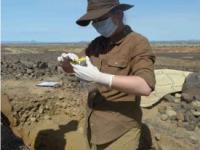
In 2009, published genome-wide DNA data was not available for a single ancient human individual. Today, there is genome-wide data available for more than 6,000 ancient humans. This rapid expansion of ancient DNA (aDNA) research enables scientists to uncover more information than ever on past human populations, including their genetic adaptations, patterns of migration and mixing, and even clues about our species’ deep past. But this wide availability of aDNA brings ethical questions on how the data is gathered and used to the forefront.

The ongoing battles over COVID-19 vaccination in the U.S. are likely to get more heated when the Food and Drug Administration authorizes emergency use of a vaccine for children ages 5 to 11, expected later this fall.
41 patients undergoing primary total knee replacement at the Hospital for Special Surgery still had access to opioids, with the addition of electroacupuncture - small electric current to thin needles that are inserted - at eight specific points in the ear, And the majority of patients said acupuncture in their ear led to less opiod use. Sixty-five percent of patients maintained a low-dose opioid regimen of 15 oxycodone pills or less (57.5%) or remained completely opioid-free (7.5%) from induction of anesthesia to 30 days after surgery.
In the period during the housing crisis recession and the economic malaise that lasted until 2017, black households lost much more wealth than white families, regardless of class or profession, according to a new political science paper.

The COVID-19 pandemic may be the deadliest viral outbreak the world has seen in more than a century. But statistically, such extreme events aren’t as rare as we may think, asserts a new analysis of novel disease outbreaks over the past 400 years.
The study, appearing in the Proceedings of the National Academy of Sciences the week of Aug. 23, used a newly assembled record of past outbreaks to estimate the intensity of those events and the yearly probability of them recurring.
A study conducted in Hungarian schools showed that seating students next to each other boosted their tendency to become friends—both for pairs of similar students and pairs of students who differed in their educational achievement, gender, or ethnicity, according to the University of Leipzig, Germany, and colleagues.
Consumers are increasingly seeking products that are local, made by individually identified people, traditional, or remind them of their childhood and family growing up. This is evidenced by the ever-increasing popularity of farmers markets, hand-cut soap, artisanal bread, the locavore movement, and the return to familiar grocery brands during the COVID-19 pandemic. Locally rooted microbreweries, for example, were at the forefront of this renaissance of artisan, indie, and craft production. In 2019, craft beer accounted for 13.6% of total U.S.
DALLAS, July 26, 2021 -- Genomic studies have produced advances in how to calculate and reduce heart-disease risk, however, the benefits don't necessarily apply to people from historically marginalized racial and ethnic groups and Indigenous populations. Efforts must be made to eliminate barriers to increase their participation in genomic research, according to a new scientific statement from the American Heart Association, published today in the Association's journal Circulation: Genomic and Precision Medicine.
Citrus fruits from the mandarin family have important commercial value but how their diversity arose has been something of a mystery
Researchers analyzed the genomes of the East Asian varieties and found a second center of diversity in the Ryukyu Islands along with the previously known center in the mountains of southern China
They discovered a new citrus species native to Okinawa that arose about two million years ago when the Ryukyu archipelago became disconnected from mainland Asia
AMES, Iowa - A new study led by an Iowa State University scientist sheds light on how organisms have evolved to address imbalances in sex chromosomes.
The study looks at a species of softshell turtle, but the results could help to illuminate an important evolutionary process in many species, said Nicole Valenzuela, professor of ecology, evolution and organismal biology and lead author of the study.