Body

Protein in prostate biopsies signals increased cancer risk

NEW YORK (December 3, 2013) -- Researchers from Weill Cornell Medical College have shown that the presence of a particular protein in biopsied prostate tissue substantially increases the likelihood that cancer will develop in that organ. The discovery will likely help physicians decide how closely to monitor men potentially at risk for the cancer -- among the most confusing and controversial dilemmas in health care.

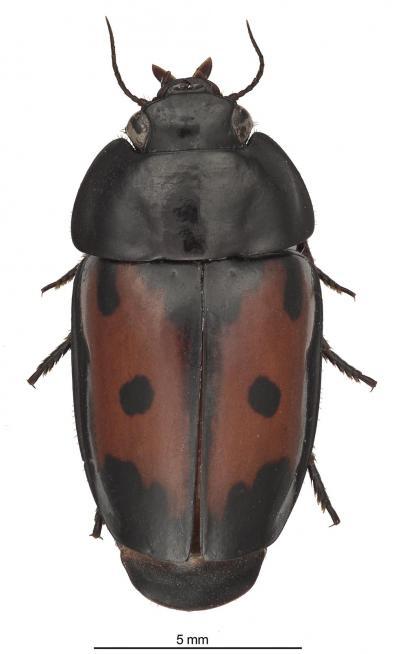
Beetles that live with ants: A remarkably large and colorful new species from Guyane

Scientists from the Smithsonian Institution describe the Spectacular Guyane False-form beetle, or Guyanemorpha spectabilis, from Guyane (French Guiana). As its name suggests, the newly discovered species stands out among its dull relatives in the Western Hemisphere, with its great size and beautiful coloration. The study was published in the open access journal ZooKeys.

Unlikely collaboration leads to discovery of 'gender-bending' plant

Bucknell University biology professor Chris Martine has discovered and described a new species of wild eggplant, found in Australia's Lost City. Martine, who named the plant Solanum cowiei, recently detailed his findings in the journal PhytoKeys.

Martine described the plant as "gender bending," and explained that the females actually pretend to be male by producing pollen.

UK review examines gender differences in COPD patients

LEXINGTON, Ky. (Dec. 3, 2013) — A new study review authored by the University of Kentucky's Dr. David Mannino examines the gender differences in the prevalence, pathophysiology, and clinical presentation of chronic obstructive pulmonary disease (COPD) and how this information may ultimately be used to identify areas for future work.

Citrus fruit inspires a new energy-absorbing metal structure

It has been said that nature provides us with everything that we need. A new study appearing in Springer's Journal of Materials Science may lend credence to that claim. Researchers from the Foundry Institute of the RWTH Aachen University in Germany, and Plant Biomechanics Group of the University of Freiburg, Germany, have developed an aluminum hybrid that could be used to optimize technical components and safety materials. And the inspiration came from an unexpected source – the peel of the pomelo fruit (Citrus maxima).

Continuing with pledge pathways to 2030 could push climate goals out of reach

Current pledges for greenhouse gas emission reductions are inadequate and will further increase the challenge to reach internationally agreed climate targets, according to new research from a global consortium of 13 international research teams coordinated by the International Institute for Applied Systems Analysis (IIASA) and the Potsdam Institute for Climate Impacts Research (PIK).

New research will allow more reliable dating of major past events

Academics have developed a new method which will allow key past events to be dated more accurately.

Research led by Professors Paul Blackwell and Caitlin Buck from the University of Sheffield's School of Mathematics and Statistics and Professor Paula Reimer from Queen's University Belfast has resulted in a new, internationally agreed radiocarbon calibration curve which will provide improved accuracy to archaeologists, environmental scientists and climate researchers who rely on radiocarbon dating to put their findings onto a reliable time-scale.

LSTM researchers among first to sequence snake genome

Researchers from LSTM, along with a team of international biologists who have recently sequenced the genome of the king cobra, say that their work reveals dynamic evolution and adaptation in the snake venom system, which seemingly occurs in response to an evolutionary arms race between venomous snakes and their prey.

Have researchers found a new treatment for sepsis?

Sepsis, or septicaemia, is a devastating disease that is difficult to diagnose early and for which treatment options are limited. The number of deaths from sepsis exceeds those from lung cancer, and from breast and bowel cancer combined.

Sepsis can affect any age group and is the leading cause of death in Intensive Care: it is estimated that 37,000 people die from severe sepsis in the UK each year with annual NHS costs exceeding £1.5billion.

Himalayan flowers shed light on climate change

Flower colour in some parts of the world, including the Himalayas, has evolved to attract bees as pollinators, research has shown for the first time.

In a study published in the Journal of Ecology, biologists from Monash University and RMIT University have investigated the evolution of flower colours due to the bee's colour vision. They researched in the understudied Nepalese steep mountainous terrain, and other subtropical environments. The study also has implications for understanding the effects of climate change on plant pollination.

KAIST developed the biotemplated design of piezoelectric energy harvesting device

A research team led by Professor Keon Jae Lee and Professor Yoon Sung Nam from the Department of Materials Science and Engineering at KAIST has developed the biotemplated design of flexible piezoelectric energy harvesting device, called "nanogenerator."

Dual protein knockout could lead to new male contraceptive

A new male contraceptive could be on the horizon after scientists identified a novel way to block the transport of sperm during ejaculation.

Published today in the journal, Proceedings of the National Academy of Science, USA, scientists have found that complete male infertility could be achieved by blocking two proteins found on the smooth muscle cells that trigger the transport of sperm.

3-D mammography increases cancer detection and reduces call-back rates, Penn study finds

CHICAGO—Compared to traditional mammography, 3D mammography—known as digital breast tomosynthesis—found 22 percent more breast cancers and led to fewer call backs in a large screening study at the Hospital of the University of Pennsylvania (HUP), researchers reported today at the annual meeting of the Radiological Society of North America (RSNA).

New evidence suggests Neanderthals organized their living spaces

DENVER (Dec. 3, 2013) – Scientists have found that Neanderthals organized their living spaces in ways that would be familiar to modern humans, a discovery that once again shows similarities between these two close cousins.

The findings, published in the latest edition of the Canadian Journal of Archaeology, indicate that Neanderthals butchered animals, made tools and gathered round the fire in different parts of their shelters.

How onions recognize when to bulb

New research from New Zealand will help to breed new onions tailored to grow in specific conditions.