
COLUMBIA, Mo. – In pets and people, the time it takes to diagnose an infection may mean life or death. Now, a University of Missouri veterinarian is identifying ways to diagnose pet infections in approximately a third of the current diagnosis time. The resulting test could be used eventually for humans.
"Infections can be difficult to diagnose, and many veterinarians have to send samples to a lab and wait three days or more as the lab attempts to grow a culture," said Amy DeClue, assistant professor of veterinary internal medicine in the MU College of Veterinary Medicine. "Meanwhile, the infection continues to spread each day that veterinarians wait on lab results, which is detrimental to the patient. In extreme infections, called sepsis, more than half of patients die. My group has been evaluating different blood biomarkers that could give a quick and accurate indication of infection, and we believe we've found a biomarker that will only require a simple blood test."
DeClue and her colleagues found that measuring the amount of the blood biomarker N-terminal portion of pro C-type natriuretic peptide (NT-pCNP) is a good indication of infection, and the same is true in humans. Working with collaborators at Veterinary Diagnostics Institute, DeClue hopes to develop a portable bedside test that veterinarians could use to quickly test patients for infection and ultimately target a better cure.
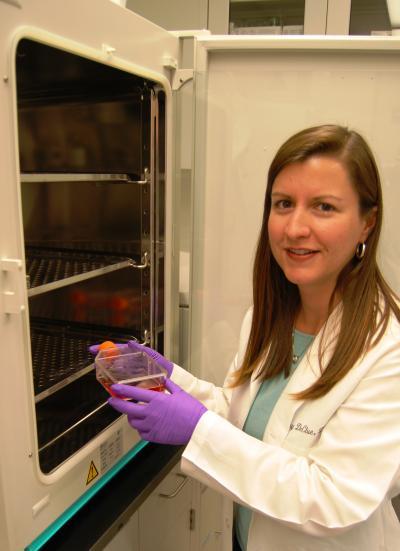
Amy DeClue, assistant professor of veterinary internal medicine in the MU College of Veterinary Medicine, says faster infection identification could save more animal lives.
(Photo Credit: MU News Bureau)
"In animal and human medicine, one goal is to reduce the amount of antibiotics used in treatment, to reduce bacterial resistance to antibiotics," DeClue said. "If successful, future tests could help veterinarians tailor treatment to the specific problem and reduce antibiotic use."
"The systems in dogs and people are very applicable to each other, so whatever biomarkers we find in dogs could also benefit people," DeClue said.
Source: University of Missouri-Columbia