
Sherman, Evans and their collaborators focused their attention on one component of this wall: pancreatic stellate cells, which usually respond to small injuries by briefly switching to an activated state, spurring new cell growth. In the case of cancer, however, the stellate cells near a tumor—in response to signals from the tumor—are constantly turned on. This chronic activation of the stellate cells provides the tumor cells with extra growth factors and therefore helps them proliferate, but also forms a wall-like barrier around the tumor that protects it from chemotherapeutics and other cancer-fighting drugs.
In 2013, Evans' group discovered that stellate cells in the liver could be inactivated by a chemically modified form of vitamin D. They wondered whether the same could hold true in the pancreas, despite the fact the vitamin D receptor was not thought to be present in pancreatic tissue.
But indeed, when the group of researchers examined the differences between activated and inactivated stellate cells in the pancreas, they found that activated stellate cells near a tumor had high levels of the vitamin D receptor. And when the researchers then added modified vitamin D to activated stellate cells the cells quickly reverted back to a healthy, inactivated state, stopping production of signals that spur growth and inflammation.
"This was a big surprise because vitamin D has been tried multiple times as a therapy for pancreatic cancer and never worked," says Evans.
It turns out that activated stellate cells rapidly break down normal vitamin D, preventing the vitamin from binding to the receptor, Evans explains. But systematic analysis of vitamin D analogues allowed the team to discover a modified form of vitamin D that is more stable, resilient and effective in vitro.
To see whether this new vitamin D-like compound could halt the growth of a tumor, Evans and the team next studied its effectiveness in mice. The researchers found that combining the drug with existing chemotherapeutics gave a 50 percent increase in lifespan compared to chemotherapy alone.
"It's really remarkable considering that vitamin D itself is not attacking the cancer cells," says Michael Downes, a senior staff scientist at Salk and co-corresponding author of the new work. "It's changing the environment to a more favorable setting needed for the chemotherapy drugs to work."
Studies have shown that people deficient in vitamin D are more likely to develop pancreatic cancer. Based on the new results, Evans thinks that healthy levels of vitamin D may help keep vitamin D receptor signaling in stellate cells normal and squash a cancer's growth—at least until a tumor itself forces the stellate cells to "turn on."
"Recently, other research groups have explored the idea of destroying the microenvironment altogether to weaken a tumor," says Downes. "Our approach is very different. Instead of destroying, we simply want to reprogram the tumor microenvironment to a healthy state. This has the dual effects of delivering more drugs to the tumor as well as replenishing the tissue with normal stellate cells."
Evans group has already teamed up with clinicians at the University of Pennsylvania to launch a clinical trial testing the effectiveness of using their vitamin D-like drug in cancer patients before pancreatic surgery. "Previous trials with vitamin D failed because they didn't understand the need for a special form of vitamin D and that for pancreatic cancer it must be used in combination with chemotoxic drugs," Evans says. "So, by re-thinking the problem, have been able to open up a new route to the treatment of pancreatic cancer and, looking forward, hopefully other diseases as well."

Salk scientists find that a vitamin D-derivative makes tumors vulnerable to chemotherapy.
(Photo Credit: Salk Institute)
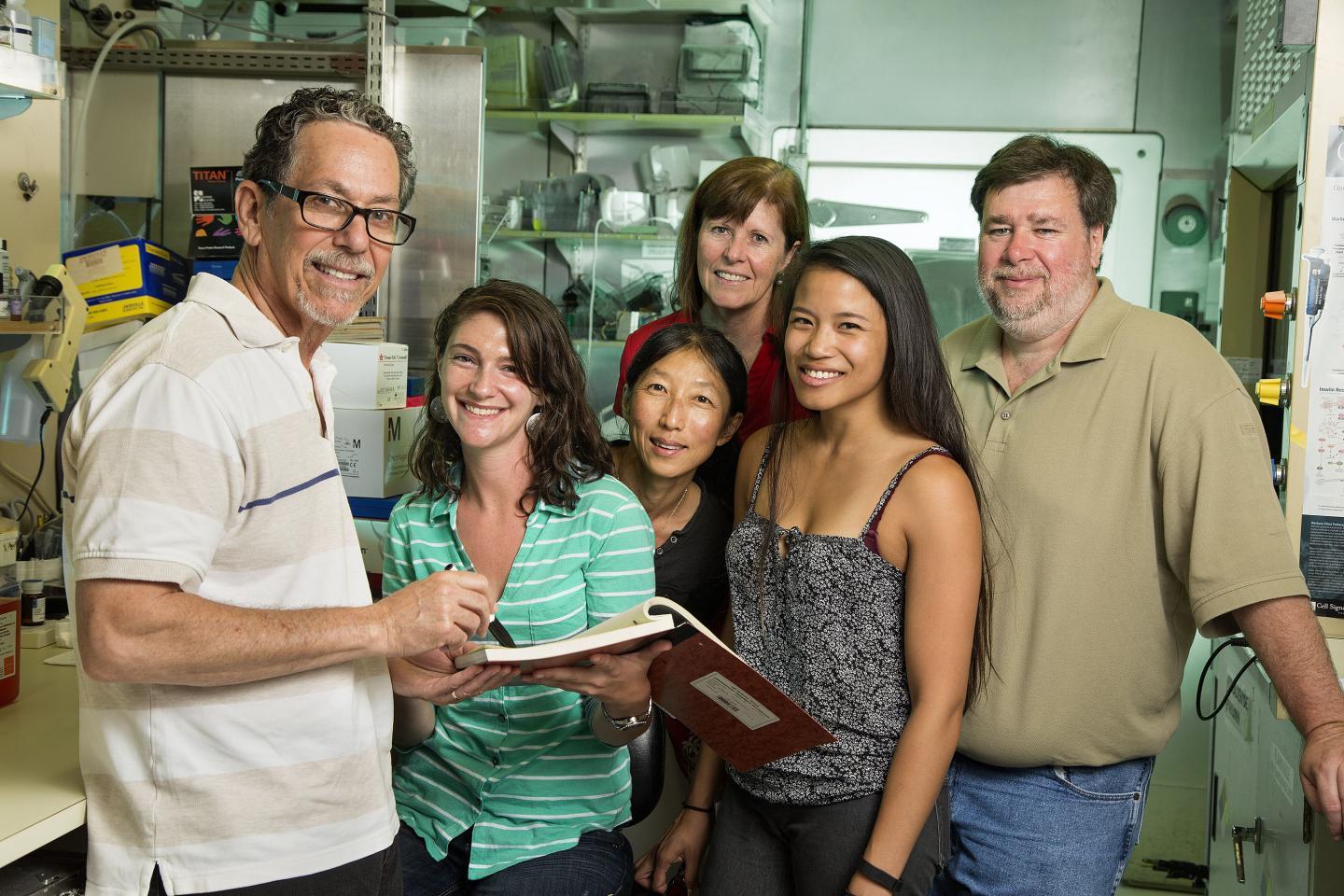
This image depicts from left to right, Professor Ronald Evans, Mira Sherman, Ruth Yu, Ann Atkins, Tiffany Tseng, and Michael Downes.
(Photo Credit: Salk Institute)
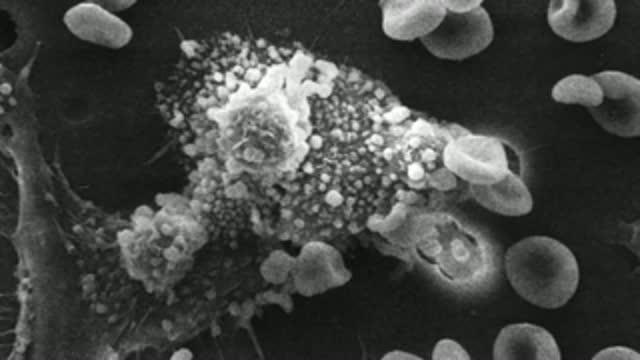
Salk scientists find that a vitamin D-derivative makes tumors vulnerable to chemotherapy.
(Photo Credit: Salk Institute)
Source: Salk Institute