
A recent study published in the Neural Regeneration Research (Vol. 8, No. 17, 2013) injected recombinant lentivirus carrying enhanced green fluorescent protein and the target gene Atoh1 into the cochlea of normal rats using a postauricular approach via the round window membrane. After 30 days, recombinant lentivirus was shown to have no impact on the hair cell numbers and auditory functions, infect hair and supporting cells, and promote supporting cells to transdifferentiate into hair cells. Researchers believed that it may be a new approach for gene therapy in the treatment of sensorineural hearing loss caused by damage to hair cells in the inner ear.
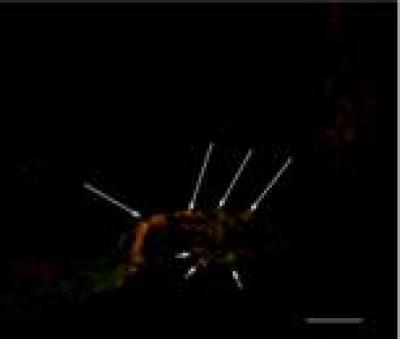
After cochlear microinjection of recombinant lentivirus carrying extrinsic Atoh1 and enhanced green fluorescent protein (EGFP), expression of EGFP displayed green fluorescence and expression of myosin 7a displayed red fluorescence. Long arrows represent hair cells and short arrows represent supporting cells.
(Photo Credit: Neural Regeneration Research)
Source: Neural Regeneration Research