
The motor relearning program can significantly improve various functional disturbance induced by ischemic cerebrovascular diseases. However, its mechanism of action remains poorly understood. According to a study published in the Neural Regeneration Research (Vol. 8, No. 16, 2013), models of ischemic brain injury in the rhesus macaque were induced by electrocoagulation of the M1 segment of the right middle cerebral artery, then the motor relearning program was after model establishment. Glial fibrillary acidic protein and neurofilament protein expression changes could reflect the repair status of damaged neurons and astrocytes, while vascular endothelial growth factor and basic fibroblast growth factor could reflect angiogenesis in damaged brain tissue. Researchers found that the motor relearning program significantly promoted neuronal regeneration, repair and angiogenesis in the surroundings of the infarcted hemisphere, and improve neurological function in the rhesus macaque following brain ischemia, which provides a new theoretical idea for the clinical treatment of brain ischemia.
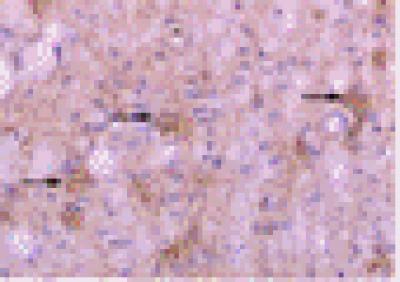
Basic fibroblast growth factor-positive cells in the precentral motor area of the brain of rhesus macaques area are observed (arrows).
(Photo Credit: Neural Regeneration Research)
Source: Neural Regeneration Research