
Scientists at the University of California, Davis, detected the H1N1(2009) virus in free-ranging northern elephant seals off the centralCalifornia coast a year after the human pandemic began, according toa study published today, May 15, in the journal PLOS ONE. It is thefirst report of that flu strain in any marine mammal.
"We thought we might find influenza viruses, which have been foundbefore in marine mammals, but we did not expect to find pandemicH1N1," said lead author Tracey Goldstein, an associate professor withthe UC Davis One Health Institute and Wildlife Health Center. "Thisshows influenza viruses can move among species."
UC Davis researchers have been studying flu viruses in wild birds andmammals since 2007 as part of the Centers of Excellence in InfluenzaResearch and Surveillance program funded by National Institutes ofHealth. The goal of this research is to understand how viruses emergeand move among animals and people.
Between 2009 and 2011, the team of scientists tested nasal swabs frommore than 900 marine mammals from 10 different species off thePacific Coast from Alaska to California. They detected H1N1 infectionin two northern elephant seals and antibodies to the virus in anadditional 28 elephant seals, indicating more widespread exposure.
Neither infected seal appeared to be ill, indicating marine mammalsmay be infected without showing clinical signs of illness.
The findings are particularly pertinent to people who handle marinemammals, such as veterinarians and animal rescue and rehabilitationworkers, Goldstein said. They are also a reminder of the importanceof wearing personal protective gear when working around marinemammals, both to prevent workers' exposure to diseases, as well as toprevent the transmission of human diseases to animals.
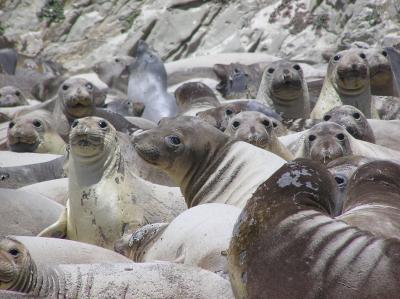
Researchers at UC Davis have discovered the H1N1 flu virus in elephant seals off the coast of central California.
(Photo Credit: Tracey Goldstein/UC Davis)
H1N1 originated in pigs. It emerged in humans in 2009, spreadingworldwide as a pandemic. The World Health Organization now considersthe H1N1 strain from 2009 to be under control, taking on the behaviorof a seasonal virus.
"H1N1 was circulating in humans in 2009," said Goldstein. "The sealson land in early 2010 tested negative before they went to sea, butwhen they returned from sea in spring 2010, they tested positive. Sothe question is where did it come from?"
When elephant seals are at sea, they spend most of their timeforaging in the northeast Pacific Ocean off the continental shelf,which makes direct contact with humans unlikely, the report said.
The seals had been satellite tagged and tracked, so the researchersknew exactly where they had been and when they arrived on the coast.The first seal traveled from California on Feb. 11 to southeastAlaska to forage off the continental shelf, returning to PointPiedras Blancas near San Simeon, Calif., on April 24. The second sealleft Ano Nuevo State Reserve in San Mateo County, Calif., on Feb. 8,traveling to the northeast Pacific and returning on May 5.Infections in both seals were detected within days of their return toland. The report said exposure likely occurred in the seals beforethey reached land, either while at sea or upon entering thenear-shore environment.
The research, led by scientists Goldstein and Walter Boyce at the UCDavis School of Veterinary Medicine's One Health Institute, wasconducted with collaborators Nacho Mena and Adolfo Garcia-Sastre atthe Icahn School of Medicine at Mount Sinai in New York, whosequenced the virus isolates and characterized their phenotypicproperties.
"The study of influenza virus infections in unusual hosts, such aselephant seals, is likely to provide us with clues to understand theability of influenza virus to jump from one host to another andinitiate pandemics," said Garcia-Sastre, professor of microbiologyand director of the Global Health and Emerging Pathogens Institute atthe Icahn School of Medicine.
Source: University of California - Davis