
The way indigenous cultures around the globe usetraditional medicines and pass on knowledge developed over centuries is directly linked to thenatural environment, new research has found.
This makes indigenous cultures susceptible toenvironmental change, a threat that comes on top of the challenges posed by globalisation.
"Traditional medicine provides health care for more than half the world's population, with 80 percent of people in developing countries relying on these practices to maintain their livelihood. Itis a very important part of traditional knowledge," says Dr Haris Saslis-Lagoudakis, from TheAustralian National University's (ANU) Research School of Biology.
"This knowledge istypically passed down from generation to generation, or it is 'borrowed' from neighbours. Because ofthis borrowing, globalisation can homogenise medicinal practices of different communities, leadingto loss of medicinal remedies."
But this is not the only challenge that indigenous culturesface.
"Imminent changes in the environment also pose a threat to traditional knowledge,"explains Dr Saslis-Lagoudakis.
"Traditional medicine utilises plants and animals to makenatural remedies. Despite a lot of these species being under threat due to ongoing climatic changesand other human effects on the environment, the effect that these changes can have on traditionalmedicine is not thoroughly understood."
Dr Saslis-Lagoudakis and a team of internationalresearchers led by the University of Reading (UK) investigated how the environment shapes medicinalplant use in indigenous cultures, specifically Nepal, a country in the Himalayans that hasoutstanding cultural, environmental and biological diversity.
"By understanding therelationship between environment and traditional knowledge, we can then understand how cultures haveresponded to changes in the environment in the past," he says.
The team studied 12 ethnicgroups from Nepal and recorded what plants different cultures use in traditional medicine. Theycalculated similarities in their medicinal floras and also calculated similarities in the florasthese cultures are exposed to, how closely related they are, and their geographic separation.
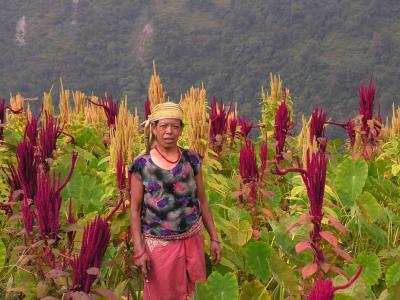
This is a Nepalese woman in the Annapurna region of north-central Nepal.
(Photo Credit: Mark Watson, Royal Botanic Garden Edinburgh)
"We found that Nepalese cultures that are exposed to similar floras use similar plantmedicines.
"Although shared cultural history and borrowing of traditional knowledge amongneighbouring cultures can lead to similarities in the plants used medicinally, we found that plantavailability in the local environment has a stronger influence on the make-up of a culture'smedicinal floras.
"Essentially, this means that the environment plays a huge role in shapingtraditional knowledge. This is very important, especially when you think of the risks that thesecultures are already facing.
"Due to ongoing environmental changes we are observing acrossthe globe, we might lose certain plant species which will lead to changed ecosystems, and an overallpoorer natural environment. This will then affect what plants people can use around them.
"Weshould be concerned about the fate of the traditional knowledge of these cultures. However,understanding the factors that shape traditional knowledge can provide the underpinnings to preservethis body of knowledge and predict its future."
This research was published today inProceedings of the Royal Society B.

Several species of Meconopsis have medicinal properties, especially in reducing fevers and treating bile diseases.
(Photo Credit: Mark Watson, Royal Botanic Garden Edinburgh)
Source: Australian National University