
CAM use was more common among children with autism than children diagnosed with other types of developmental delay, 40 percent versus 30 percent respectively. Nearly 7 percent of children with autism were on the gluten-free/casein-free diet, particularly children with frequent gastrointestinal problems.
"We were pleased to find that most families utilizing CAM therapies were choosing ones that were low risk," said Kathleen Angkustsiri, assistant professor of developmental and behavioral pediatrics and a study co-author.
However, a small but statistically significant number — about 4 percent — were found to use alternative treatments classified by the study as potentially unsafe, invasive or unproven, such as antifungal medications, chelation therapy and vitamin B-12 injections.
"Our study suggests that pediatricians and other providers need to ask about CAM use in the context of providing care for children with autism and other developmental disorders, and take a more active role in helping families make decisions about treatment options based on available information related to potential benefits and risks," said Roger Scott Akins, lead author and a former postdoctoral fellow at the MIND Institute, who now is chairman of the Division of Neurodevelopmental Pediatrics at Naval Medical Center Portsmouth, Va.
Irva Hertz-Picciotto, professor of public health sciences and principal investigator for the CHARGE study, said the research supports the emergent need for identifying validated treatments for neurodevelopmental conditions.
"These findings emphasize the enormous and urgent need for effective treatments and for rigorous research that can identify them and verify their effectiveness and safety," Hertz-Picciotto said. "Of course it is reasonable for parents to keep searching for ways to help their children, when there are few effective treatments and none that can help every child."
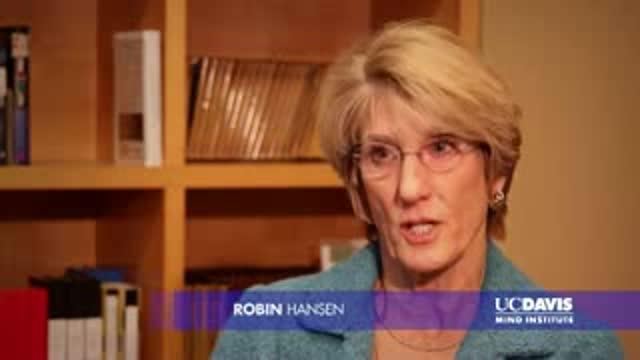
Dr. Robin Hansen discusses her research.
(Photo Credit: University of California Regents)
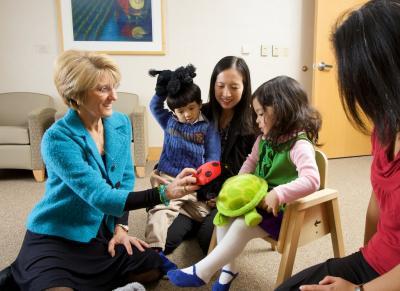
This is Professor Robin Hansen, left, with children at the UC Davis MIND Institute.
(Photo Credit: University of California Regents)