Brain

A Mediterranean diet with added extra virgin olive oil or mixed nuts seems to improve the brain power of older people better than advising them to follow a low-fat diet, indicates research published online in the Journal of Neurology Neurosurgery and Psychiatry.

The authors from the University of Navarra in Spain base their findings on 522 men and women aged between 55 and 80 without cardiovascular disease but at high vascular risk because of underlying disease/conditions.
LEAWOOD, Kan. – Primary care practice transformation on a large scale is the cornerstone of current health care reform efforts aimed at achieving better outcomes, better value and better experience of care. Amid emerging evidence that transformation toward the patient-centered medical home model offers a viable solution in today's health care environment, the U.S.

In a new business, sometimes the better part of wisdom is knowing when to quit, a new study concludes.

Even though persistence is a key to business success, entrepreneurs might be more successful if they not only knew when to start a business and take risks, but also knew when to abandon it and find something that provides a greater opportunity, researchers said.

It may be human nature to want to make an idea work, but it can also be a poor business decision to stay wedded to an idea if the evidence suggests it's not working as well as another potential opportunity.

Amsterdam, NL, 20 May 2013 – While Huntington's disease (HD) is currently incurable, the HD research community anticipates that new disease-modifying therapies in development may slow or minimize disease progression. The success of HD research depends upon the identification of reliable and sensitive biomarkers to track disease and evaluate therapies, and these biomarkers may eventually be used as outcome measures in clinical trials. Biomarkers could be especially helpful to monitor changes during the time prior to diagnosis and appearance of overt symptomatology.

Future teams of subterranean search and rescue robots may owe their success to the lowly fire ant, a much-despised insect whose painful bites and extensive networks of underground tunnels are all-too-familiar to people living in the southern United States.

Salamanders' immune systems are key to their remarkable ability to regrow limbs, and could also underpin their ability to regenerate spinal cords, brain tissue and even parts of their hearts, scientists have found.

In research published today in the Proceedings of the National Academy of Sciences researchers from the Australian Regenerative Medicine Institute (ARMI) at Monash University found that when immune cells known as macrophages were systemically removed, salamanders lost their ability to regenerate a limb and instead formed scar tissue.

Individuals who learn two languages at an early age seem to switch back and forth between separate "sound systems" for each language, according to new research conducted at the University of Arizona.

The research, to be published in a forthcoming issue of Psychological Science, a journal of the Association for Psychological Science, addresses enduring questions in bilingual studies about how bilingual speakers hear and process sound in two different languages.

Philadelphia, Pa. (May 20, 2013) – Posterior fossa subdural hematoma (PFSDH) is a serious and rare condition in newborns, generally occurring after difficult deliveries. But with appropriate treatment, there's an excellent chance of good long-term outcomes even in severe cases of PFSDH, reports a study in the May issue of Neurosurgery, official journal of the Congress of Neurological Surgeons.

What is it about toothpaste that transforms the sweet flavor of orange juice into something so bitter? For the solution to that mysterious sensory phenomenon — in colorful, animated detail — check the latest episode of the American Chemical Society's award-winning Bytesize Science video series at http://www.BytesizeScience.com

Tampa, FL (May 20, 2013) -- While the effects of acute stroke have been widely studied, brain damage during the subacute phase of stroke has been a neglected area of research. Now, a new study by the University of South Florida reports that within a week of a stroke caused by a blood clot in one side of the brain, the opposite side of the brain shows signs of microvascular injury.

Stroke is a leading cause of death and disability in the United States, and increases the risk for dementia.

A new study conducted by researchers at the Child Study Center at NYU Langone Medical Center found men diagnosed as children with attention-deficit/hyperactivity disorder (ADHD) were twice as likely to be obese in a 33-year follow-up study compared to men who were not diagnosed with the condition. The study appears in the May 20 online edition of Pediatrics.

A new study conducted at the University of Bristol and published online today in the Journal of Evolutionary Biology sheds light on how the brain and inner ear developed in dinosaurs.

Stephan Lautenschlager from Bristol's School of Earth Sciences, together with Tom Hübner from the Niedersächsische Landesmuseum in Hannover, Germany, picked the brains of 150 million year old dinosaurs.

Patients with treatment-resistant major depression saw dramatic improvement in their illness after treatment with ketamine, an anesthetic, according to the largest ketamine clinical trial to-date led by researchers from the Icahn School of Medicine at Mount Sinai. The antidepressant benefits of ketamine were seen within 24 hours, whereas traditional antidepressants can take days or weeks to demonstrate a reduction in depression.

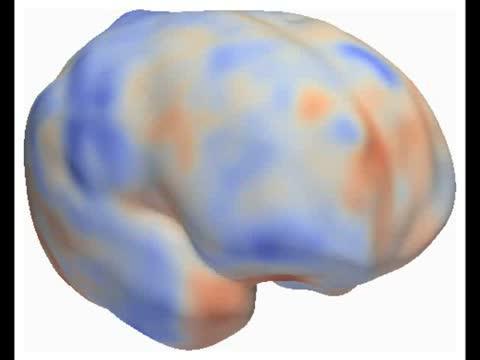
NEW YORK, May 18, 2013. Chronic trauma can inflict lasting damage to brain regions associated with fear and anxiety. Previous imaging studies of people with post-traumatic stress disorder, or PTSD, have shown that these brain regions can over-or under-react in response to stressful tasks, such as recalling a traumatic event or reacting to a photo of a threatening face. Now, researchers at NYU School of Medicine have explored for the first time what happens in the brains of combat veterans with PTSD in the absence of external triggers.