
The apes in this study faced two different types of problems: one where they made choices about whether to wait to obtain larger rewards, and one where they made choices about whether to take a chance to obtain a high-quality treat, but risk obtaining a non-preferred food item if their gamble did not pay off. The scientists found that both species displayed emotional responses to the outcome of their choice, but chimpanzees were more patient and likely to take risks than bonobos. When their choice yielded the less preferred outcome, both species displayed negative emotional responses including vocalizations similar to pouts and moans, scratching, and banging--a type of tantrum thought to reflect anger in apes. In the risky choice task, the apes even tried to switch their choice after the fact when they realized they had made a losing gamble, but never did so when their risk-taking paid off. Some of the emotional and motivational responses displayed by the apes were species-specific while others reflected individual differences in the animals.

This video shows bonobo temporal choice. The bonobo chooses the larger, delayed reward (three pieces of food) over the smaller, immediate reward (one piece of food). He scratches after his choice.
(Photo Credit: Rosati AG, Hare B (2013) Chimpanzees and Bonobos Exhibit Emotional Responses to Decision Outcomes. PLoS ONE 8(5): e63058. doi:10.1371/journal.pone.0063058)
Based on their results, the authors conclude that apes do exhibit emotional responses to decision-making, like humans. They add that further research is needed to determine whether these emotional responses to outcomes can change the apes' future choices and decisions.
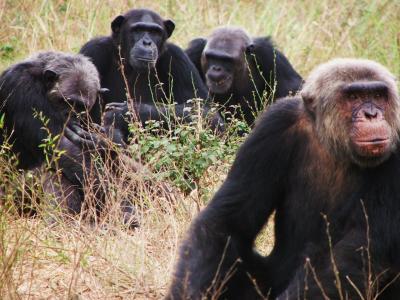
These chimpanzees were study subjects at the Tchimpounga Chimpanzee Sanctuary inPointe Noire, Republic of Congo.
(Photo Credit: Alexandra Rosati)
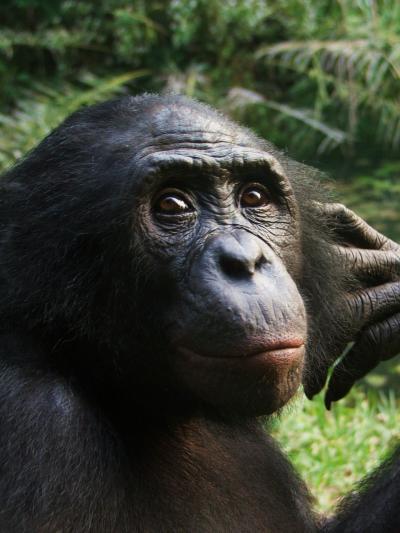
This is a bonobo who was a study subject at Lola ya Bonobo Sanctuary in Kinshasa, Democratic Republic of Congo.
(Photo Credit: Alexandra Rosati)
Source: Public Library of Science