
Although conceptually they could be equivalent, a biosimilar drug is not a generic drug. The latter are exact copies of relatively simple molecules (paracetamol, acetylsalicylic acid), obtained by means of chemical synthesis methods. Biosimilars, by contrast, are copies of highly complex molecules of a protein nature, the production of which involves biological processes and materials, like cell culture or the extraction of products using living organisms, which is why there is no product that is exactly the same as the other. As they are comparable but not exact copies of the original drugs, the regulations governing generics is not scientifically appropriate for biosimilars. "Small variations in the molecule, even in the manufacturing process, could give rise to a slightly different product, and that is why their manufacture needs to be specifically regulated," stressed Begoña Calvo-Hernáez, Professor of Pharmacy at the UPV/EHU.
The studies in this field by the PharmaNanoGene group in the Pharmacy and Pharmaceutical Technology Area of the UPV/EHU's Faculty of Pharmacy began in 2006, and since then have prompted numerous publications, cited on many occasions in top journals, including the New England Journal of Medicine.
"Our research covers the studies that need to be done and are being demanded by the pharmaceutical industry for the development, approval and subsequent monitoring of biosimilar drugs in line with the regulations of the European Medicines Agency," explained Calvo. "On the basis of this, the health authorities will be able to set up a suitable regulatory environment, and the prescribing of these drugs, which are going to lead to significant savings for healthcare systems, can ultimately be increased," she added. These regulations, which are pioneering ones and a reference worldwide, were established in 2004; thanks to them, 12 biosimilar drugs have been approved in Europe, although in the United States none have been approved as yet.
Savings for the healthcare system
In percentage terms, the savings generated by biosimilars would not be as great as those generated by generics, which can lead to savings of as much as 40% per prescription. But because they are such expensive drugs —just one of these treatments can bring annual income in excess of 1,000 million euros for the laboratory— a small reduction in the cost of production is a great advantage for the system.
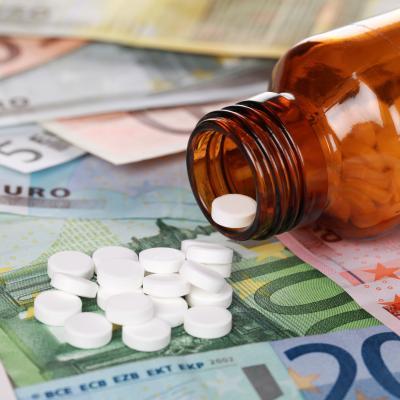
The development of specific regulations for biosimilar drugs firstly guarantees the safety of these drugs and secondly, and as a result, allows less expensive treatments to be developed and marketed.
(Photo Credit: UPV/EHU)
Among the biosimilars approved in Europe are the growth hormone erythropoietin (EPO), interferon and, more recently, the first biosimilars of monoclonal antibodies, specifically of Infliximab, designed to treat autoimmune diseases (rheumatological, psoriatic diseases and those linked to Crohn's, among others), and scheduled to be marketed from this year onwards. Monoclonal antibodies are molecules that are even more complex than the initial biosimilars, and they are expected to have a "huge" impact. It is reckoned that the introduction of biosimilar monoclonal antibodies could save over 20,000 million euros in Europe up until 2020.
According to forecasts of the IMS-Institute of Health Studies and Research, biosimilars could achieve a market share of 10% of biological drugs by 2020, with a volume of up to 25,000 million euros.
Calvo is in no doubt that we are facing a "key" moment in the development of biosimilars, "although their introduction will depend on how the health authorities want to promote them. In Spain the introduction of approved biosimilars varies: while some biosimilars have reached levels of introduction in the region of 50% (the case of filgrastim used among other purposes for combating the fall in defences in certain oncological patients treated with chemotherapy), others like erythropoietins are in the region of 20%, and the growth hormone around 5%.
Source: University of the Basque Country